
How to Check Criminal History in Pittsburgh
A Pittsburgh records check works best when the question comes first. Request an incident or arrest report from the city. Search the free UJS portal for preliminary and filed court events. Use Allegheny County Jail channels for current custody, the Department of Court Records for the official Common Pleas file, and PATCH for a Pennsylvania repository response.
- Start with Pittsburgh Police for the city incident or arrest report.
- Use the city open-records route with a precise date, place, and incident number.
- Search UJS at the Pittsburgh Municipal Court level.
- Check Allegheny County custody and Common Pleas records if the matter advanced.
- Use PATCH when the question concerns the PSP repository response.
Pittsburgh Police Reports to County Dockets
A report begins with the Pittsburgh Bureau of Police, but prosecution records do not remain in a city file. The complaint reaches Pittsburgh Municipal Court for preliminary functions. A misdemeanor or felony held for court later receives a Common Pleas docket, often in the CP-02-CR sequence. Court dispositions then flow to the Pennsylvania State Police Central Repository.
This handoff explains why one search rarely answers every question. The city report describes the police event. The UJS docket shows charges, hearings, bail, and outcomes. PATCH compiles reportable arrest and disposition cycles by identity. None replaces the others.
The Pittsburgh Police Department
The Pittsburgh Bureau of Police is the source for its incident and arrest reports.
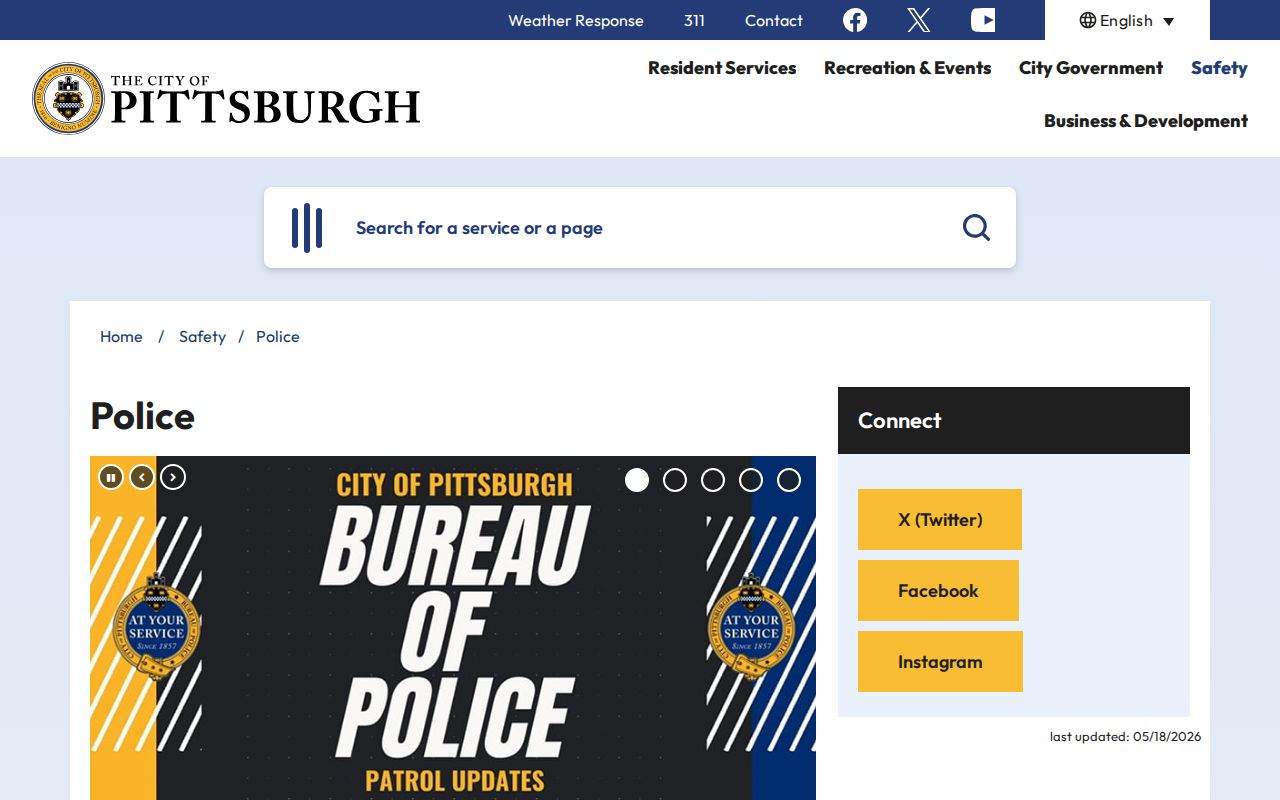
The official hub confirms the municipal source before a reader moves to county court records.
A city request should name the department, describe the record, and give a date range, location, incident or case number, desired format, and delivery method when known. Police incident, body-camera, 911 or CAD, crash, and arrest materials may face different review rules and redactions.
Pittsburgh Open Records Requests
The City of Pittsburgh open-records channel handles city records, not the county court file. A clear request identifies the Bureau of Police and uses a narrow record description. Include the event date and location, names only when needed, and the incident number if available. Ask for inspection, electronic copies, certification, or another format with care.
Active criminal investigations and protected victim or personal data may be withheld or redacted under Pennsylvania law. A denial does not mean the court docket is also unavailable. Search UJS separately, because judicial records follow the UJS access policy rather than the ordinary city agency route.
Arrests and Bookings in Pittsburgh
Pittsburgh arrestees enter Allegheny County Jail and arraignment systems. The city report still belongs to Pittsburgh Police, while booking date, current custody, housing, and release information belong to county jail channels. Jail general information is available at 412-350-2000, and arraignment or bail information at 412-350-3240.
Charges can change after intake. Use the UJS docket to track what prosecutors filed and how the court disposed of each count. An arrest proves an event, not guilt.
Pittsburgh Night Court Every Night
Pittsburgh differs from the county's other cities because Pittsburgh Municipal Court at 660 First Avenue performs preliminary arraignment and hearing functions and handles summary matters. Night Court operates seven nights a week, including holidays. That schedule can place an initial judicial event on the docket while police and jail records are still moving through their own systems.
Search both Pittsburgh Municipal Court and Common Pleas levels when following a case. A missing result at one level may simply mean the proceeding remains at another stage.
Pittsburgh Municipal Court Records
Pittsburgh Municipal Court handles summary matters and preliminary criminal functions. Filed misdemeanor and felony prosecutions proceed to the Court of Common Pleas at 436 Grant Street. UJS Case Search is the free public lookup channel.
| Court Name | Pittsburgh Municipal Court |
|---|---|
| Case Types Heard | Summary cases and preliminary criminal proceedings |
| Case Lookup Channel | UJS Case Search; court and DCR counters for official files |
| What the Docket Shows | Charges, events, bail, counsel, dispositions, sentence, and financial entries |
| Copies & Fees | Official DCR schedule controls copies and certification |
Where Pittsburgh Records End Up
Pittsburgh Police keeps its report. Court records move from the municipal level to Common Pleas when charges are held for court, and reportable outcomes reach PSP.
Record flow: Pittsburgh Police › Pittsburgh Municipal Court › Allegheny County Courts › Pennsylvania State Police Central Repository
Use city records for the incident, county jail for custody, UJS or DCR for prosecution, and PATCH for the repository response.
Pittsburgh Police File Versus Room 220
The police report and Room 220 file are not duplicates. A police narrative can include the reported event and investigative material subject to redaction. The DCR file holds the prosecution's complaint or information, motions, orders, pleas, trial result, sentence, and financial obligations. Current and four prior years remain on site; older cases require storage retrieval.
For a certified judgment, order the official file and certification. A printed web docket is useful for research but is not a certified court copy.
Pittsburgh OTN and Docket Numbers
The Offense Tracking Number links fingerprint processing to the prosecution. A Common Pleas number often follows CP-02-CR-sequence-year, with 02 identifying Allegheny County. These identifiers reduce mistakes among common names and help staff locate the correct file.
When no UJS result appears, try both court levels, alternate spellings, a different filing year, and the docket number. Very recent, juvenile, limited-access, or archived matters may not appear publicly.
Public Access Rules for Pittsburgh Records
The Pennsylvania Right-to-Know Law governs many city agency requests, but criminal investigations may be exempt and protected data may be redacted. Court electronic access follows the UJS policy. CHRIA controls repository dissemination and limited-access treatment.
Key Statutes:
Pennsylvania Right-to-Know Law sets the general agency request process and exemptions.
UJS Electronic Case Record Public Access Policy excludes protected identifiers and victim data.
18 Pa.C.S. § 9121 controls PSP criminal-history dissemination.
Pittsburgh Records Across City Lines
The county contains separate municipal police sources. The official McKeesport Police page documents one such agency.
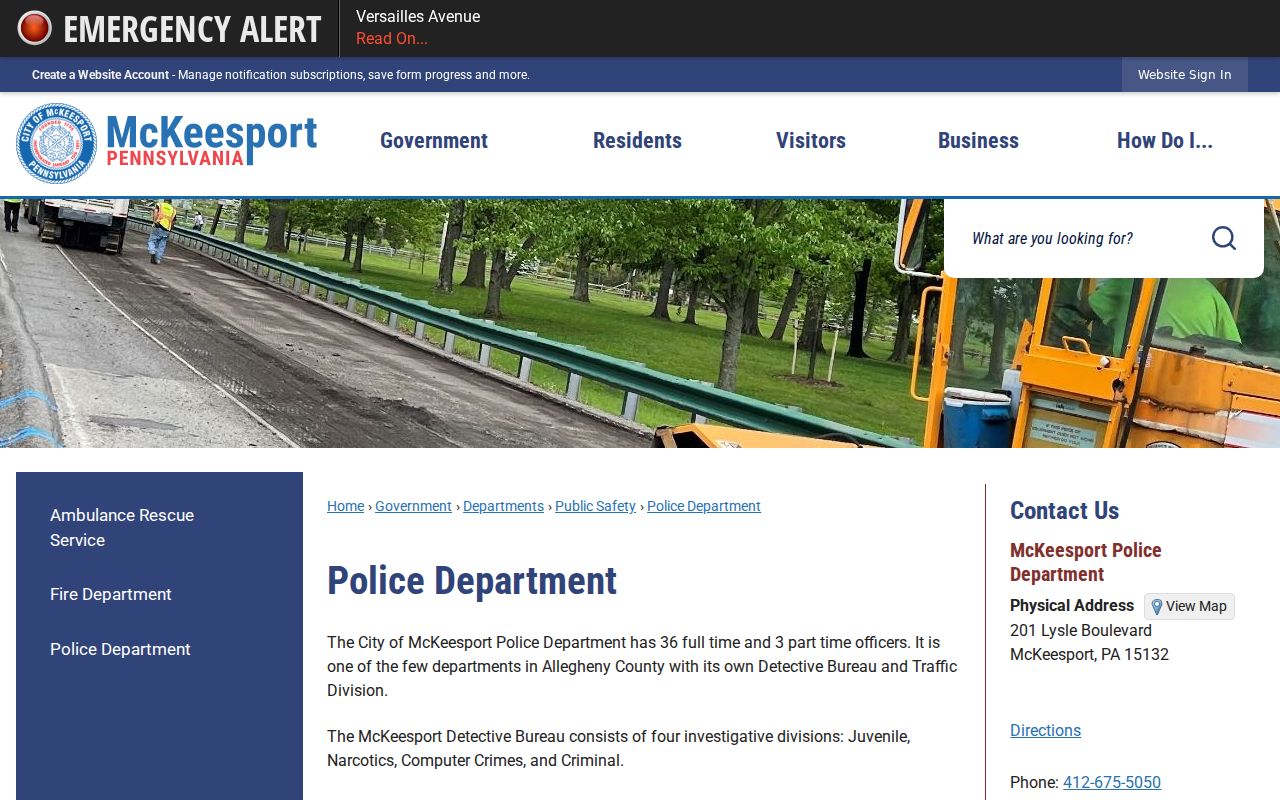
That division shows why Pittsburgh Police remains the source for a Pittsburgh incident even though later court and jail records are countywide.
The official Clairton city page provides another comparison.
Shared downstream systems do not erase the city source of the first police report.
Pittsburgh UJS Search Fields
Use UJS Case Search without an account. Choose Case Information and Case Search, then select Pittsburgh Municipal Court or Common Pleas and Allegheny County. Participant name can begin the search, but a date of birth when available, filing range, case status, docket type, and docket number reduce false matches. Select the criminal category where the portal offers it. Results can be sorted and filtered before opening a docket sheet.
The public sheet can show general case information, charges and dispositions, counsel, calendar events, filings, sentence, and financial entries. It is an electronic subset, not every filed PDF. Protected identifiers and victim contact information are excluded. When a document itself is needed, use the Department of Court Records rather than assuming that a docket event link contains it.
Pittsburgh Cases Older Than Four Years
Current files and the four prior years remain available at the criminal records counter in Room 220 of the Allegheny County Courthouse. Older Pittsburgh cases require retrieval from storage. Plan around that distinction when a UJS result names an old disposition but the official paper or imaged file is needed. Staff can explain procedure, though they do not discuss case facts by telephone.
Room 114 handles docket, bond, appeal, and expungement functions, while Room 222 handles DUI matters. The room number is part of a useful Pittsburgh search because the courthouse is an active records building with several specialized counters. A request sent to the wrong counter may delay access even when the docket number is correct.
Pittsburgh Preliminary and Filed Charges
The first complaint records allegations at the preliminary stage. After a hearing, charges may be held for court, withdrawn, or dismissed. The district attorney’s information becomes the Common Pleas charging paper. Counts and grades can therefore differ from the police report or booking entry. Follow each count through its final disposition instead of treating the first charge list as permanent.
At Common Pleas, the docket may show arraignment, pleas, pretrial motions, trial events, sentence, costs, restitution, probation, or appeal activity. Nolle prosequi means prosecution ended with court permission. Acquittal means not guilty. A guilty plea waives trial, while nolo contendere is treated as a conviction. These terms explain outcomes that a simple arrest record cannot.
Pittsburgh Specialty Court Events
Allegheny County names six problem-solving courts that may serve Pittsburgh cases: Domestic Violence, DUI, Drug, Mental Health, Sex Offender, and Veterans Courts. These dockets combine judicial monitoring, supervision, services, incentives, and sanctions through an individual plan. A public docket may therefore include review events or specialized conditions that do not appear in an ordinary case sequence.
Participation does not automatically erase the prosecution. The final disposition and Pennsylvania relief law control whether expungement or limited access may apply. When a program entry is unclear, read the surrounding docket events and obtain the official file. Avoid guessing about treatment notes, drug tests, risk assessments, or other supervision material that is not publicly displayed.
Pittsburgh County and Federal Courts
Grant Street contains both county and federal court functions, but their systems do not merge. Pennsylvania charges use Pittsburgh Municipal Court, Allegheny Common Pleas, UJS, and DCR. A federal prosecution in the Western District of Pennsylvania uses the federal clerk and PACER. PATCH is limited to Pennsylvania law-enforcement criminal-history files and does not become a national court search.
For a Pittsburgh event, confirm the prosecuting jurisdiction before searching. A nearby courthouse address is not proof that a county record exists. Federal custody also belongs in the Bureau of Prisons locator, not the Allegheny County Jail or Pennsylvania DOC locator. This jurisdiction check saves time and prevents records from different systems from being combined.