
Arrest History in Allegheny County
Allegheny County arrests may be made by Pittsburgh Bureau of Police, independent municipal departments such as McKeesport and Clairton, Allegheny County Police, transit police, campus police, or Pennsylvania State Police. The agency that made the arrest keeps its own incident and arrest report. Allegheny County Jail creates the booking and custody record. The courts create the complaint, bail, hearing, and prosecution record. No single county search replaces all of those sources.
An Allegheny County arrest history can therefore mean several things. A recent custody question calls for the jail. Facts alleged by an officer belong in the police report. Filed charges and outcomes belong in UJS and the Department of Court Records. A Pennsylvania repository response comes from PSP. These files may use different times and charge descriptions because each office records a different point in the process.
Four Allegheny County Arrest Records
One Allegheny County arrest commonly creates at least four public-record trails. Police record the alleged facts and arrest basis. Jail intake records identity, property, health screening, fingerprints, charges, bail, housing, and release or transfer. Preliminary arraignment produces a judicial record. If prosecutors proceed, the court docket tracks each filed count through disposition and sentence.
Record flow: Police report › Jail booking › Fingerprint and OTN report to PSP › Preliminary court docket › Common Pleas case
The OTN, or Offense Tracking Number, is a key link between fingerprint processing and the prosecution. Names alone are weaker. Similar names can point to different people, and initial charges can be changed by the district attorney after intake.
How to Look Up Allegheny County Arrests
There is no documented public county booking roster that answers every recent-arrest question. The working fallback chain starts with official jail phone service, then traces the event through court and police records. Use PATCH last when the question concerns a Pennsylvania repository response, because it is not a live arrest blotter.
- Call Allegheny County Jail at 412-350-2000 for current custody, location, pod, release, or transfer information.
- Call Arraignment Court at 412-350-3240 for booking-date, preliminary arraignment, and bail information.
- Search UJS Case Search at both minor-court and Common Pleas levels for the court trail.
- Identify the arresting agency and request its incident or arrest report through that agency's records channel.
- Use PATCH for PSP repository data, or PSP Individual Access and Review when checking and correcting one's own record.
- Route a formal request to the actual record holder when phone and online channels do not provide the needed document.
Note: Match an Allegheny County arrest with an OTN or docket number before treating records from separate systems as one event.
Allegheny County Arrest Phone Channels
The county's phone channels are more useful than a vague direction to contact the sheriff. The Allegheny County Jail FAQ routes current custody, booking date, pod, release, and records questions. General custody and location calls go to 412-350-2000. Former incarcerated people may request their own records through the Jail Record Office at 412-350-2635. Arraignment Court at 412-350-3240 handles booking-date and bail information.
The official jail FAQ captures those Allegheny County booking channels.
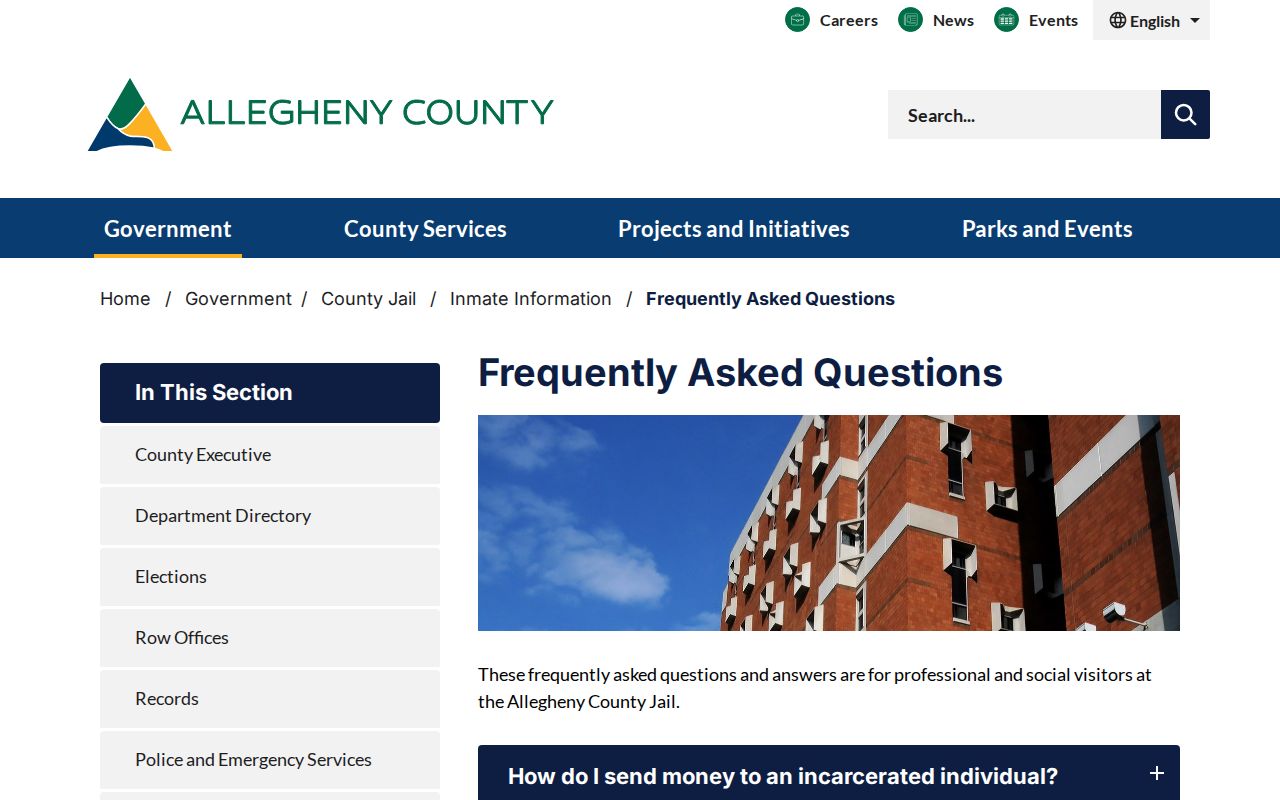
The screenshot supports the phone-first fallback when no public roster result is available.
Allegheny County Jail Record Office
Records for former incarcerated people and booking-related follow-up
Record Office: 412-350-2635
Current custody: 412-350-2000
Arraignment and bail: 412-350-3240
What an Arrest Record Shows
An Allegheny County arrest record should be read by holder. A police record can include the incident number, place, officer, narrative, evidence, and alleged arrest basis. The booking record is an administrative custody file. Court records add the complaint, OTN, bail, counsel, hearing, and later charge outcomes. PSP keeps the identifier, arrest, and disposition cycle reported to the Central Repository.
| Booking Number | The jail's identifier for the custody intake |
|---|---|
| Booking Date & Time | When intake was recorded, which may differ from arrest or arraignment time |
| Arresting Agency | The police body that created the source arrest report |
| OTN and Court | Cross-reference to fingerprint reporting and the judicial case |
| Charges | Intake allegations that may later be amended, withdrawn, or dismissed |
| Bail | Type, amount, and judicial decision where public |
| Custody Status | Current location, housing, release, or transfer information |
| Booking Photo | Release is not assumed; official policy, privacy, safety, and investigation limits control |
Allegheny County Arrest Police Reports
The arresting municipality is the source for its own incident narrative. Pittsburgh arrests should be routed through the City of Pittsburgh open-records channel, not to county DCR. McKeesport and Clairton maintain separate police departments. Allegheny County Police, transit police, campus agencies, and PSP also keep their own reports. A request should describe the record, agency, date range, incident or case number, and desired format rather than asking the records officer to answer a general question.
The county Open Records hub is a formal fallback for county-held agency records. Judicial files follow court access policy, not the ordinary Right-to-Know Law route. Investigative details, victim data, juvenile material, private identifiers, and sealed records can be withheld or redacted. PSP may charge $5 for a full report of investigation under the researched schedule, while municipal fees and rules depend on the originating office.
Recent Arrests and Booking Logs
PATCH should not lead a search for recent Allegheny County arrests. Repository reporting can lag, and PATCH searches Pennsylvania criminal-history files rather than a live jail intake list. Start with the jail's current custody line and Arraignment Court. Next, search UJS for a complaint or preliminary docket. A very recent matter may appear at the minor-court level before any Common Pleas case exists.
An empty custody result proves little. A person may have been released, transferred to state or federal custody, booked under details that do not match the search, or moved before the inquiry. The Pennsylvania Inmate/Parolee Locator covers state-sentenced custody and parole, updates daily, and expressly excludes people held only in a county jail. Search by last name or inmate number first.
Recent booking data has a shorter life than arrest history. A custody entry may change as bail is posted, a court orders release, another facility accepts a transfer, or a sentence moves the person into state custody. Preserve the booking number, arresting agency, OTN, and docket when available. Those identifiers let a reader follow the same Allegheny County arrest after the jail's current-status answer changes. Former incarcerated people seeking their own jail file can use the Record Office channel.
Allegheny County Arrest Custody Transfers
A vanished jail result may indicate release or transfer, not the absence of an arrest. Call the Allegheny County Jail general line, then use the DOC locator for state custody or the federal Bureau of Prisons locator for federal custody. Keep following the prosecution through UJS because custody status and court status are separate.
The official Pennsylvania parole absconder system is also separate from Allegheny County booking history.
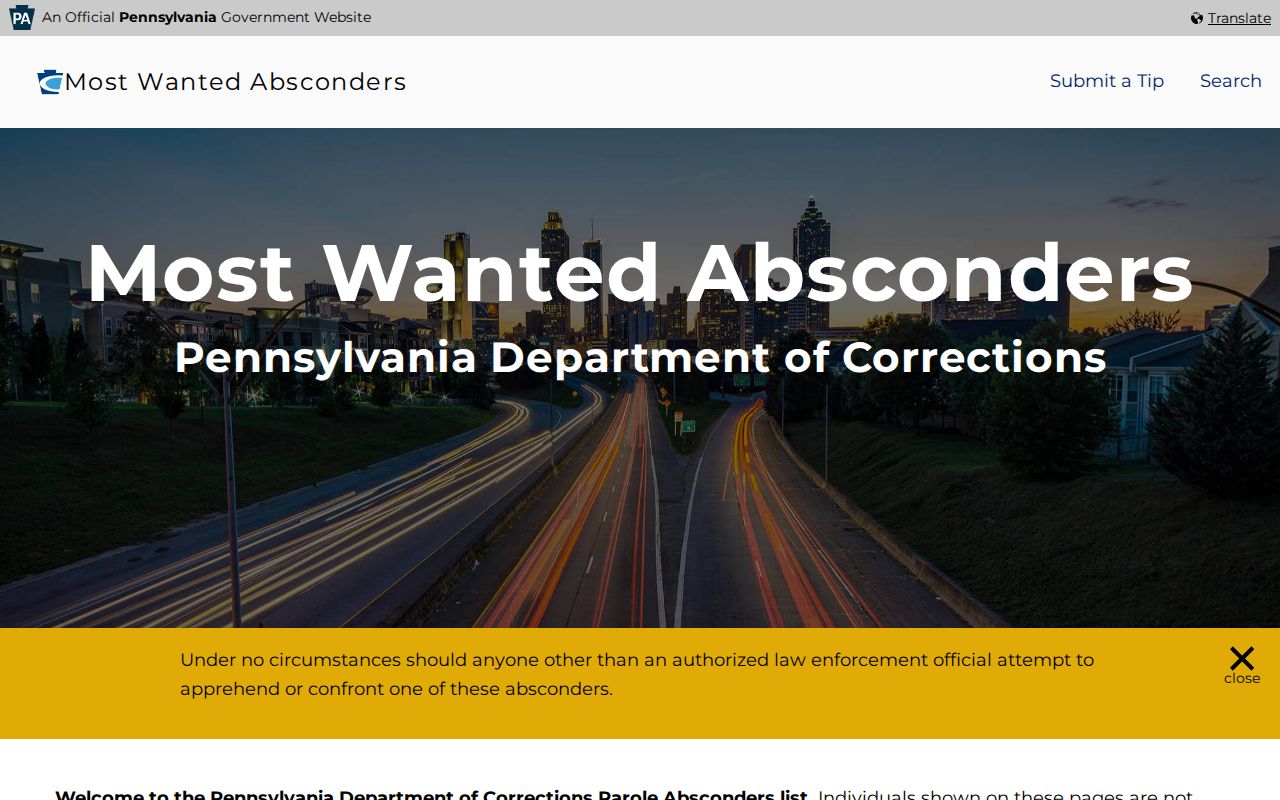
It covers alleged nonreporting under parole conditions, not all warrants or all people arrested in Allegheny County, and it warns the public not to confront anyone listed.
Absconder status is a supervision issue. It must not be described as a new Allegheny County conviction or a complete warrant search. If a bench-warrant event appears on a UJS docket, confirm it with the issuing court. The county Warrant Office publishes 412-350-4714 but expressly says it gives no warrant information by telephone. A generic phone inquiry is therefore not a safe warrant clearance.
Allegheny County Arrest to Arraignment
Booking can include transport, identity review, property inventory, medical and mental-health screening, fingerprints, a photograph, charge entry, classification, and a housing decision. Preliminary arraignment then creates a court event and addresses bail. These steps have distinct timestamps. The arrest time, jail intake time, and court arraignment time should not be treated as one value.
The current Common Pleas judicial roster is useful only after an Allegheny County criminal case reaches that court.
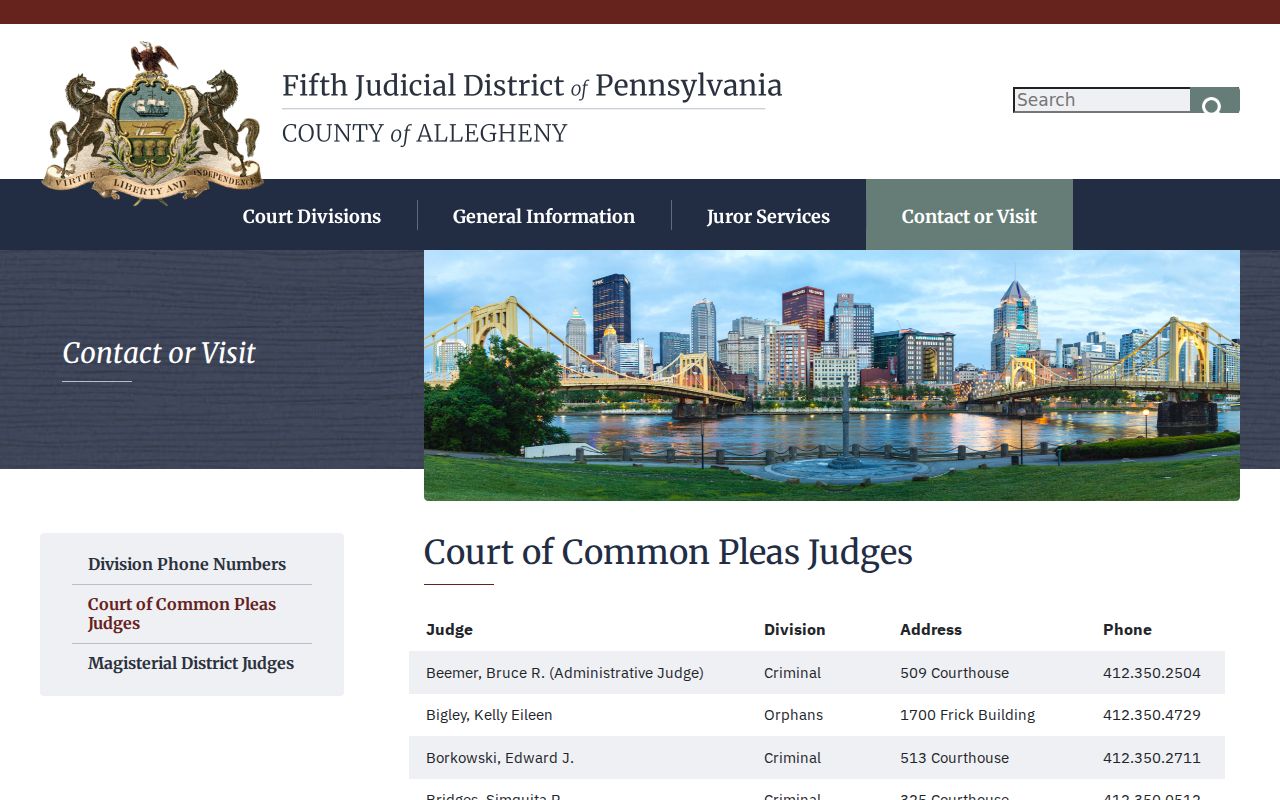
Judicial assignment does not change who holds the arrest report or booking file. Police and jail records remain with their originating offices.
Charge wording may shift at this handoff. The jail records charges received at intake. The district attorney later decides what to place in the Common Pleas information. Compare both with the final charge-level disposition rather than assuming an intake label stayed unchanged. Police arrest, jail staff book, prosecutors charge, and courts adjudicate. Tying each verb to the right office prevents an allegation from being misstated as a court result.
Allegheny County Arrests and Registry Records
The Pennsylvania State Police registration information describes another distinct record system. Registration may follow a qualifying adjudication, but the registry is not a list of recent Allegheny County arrests.
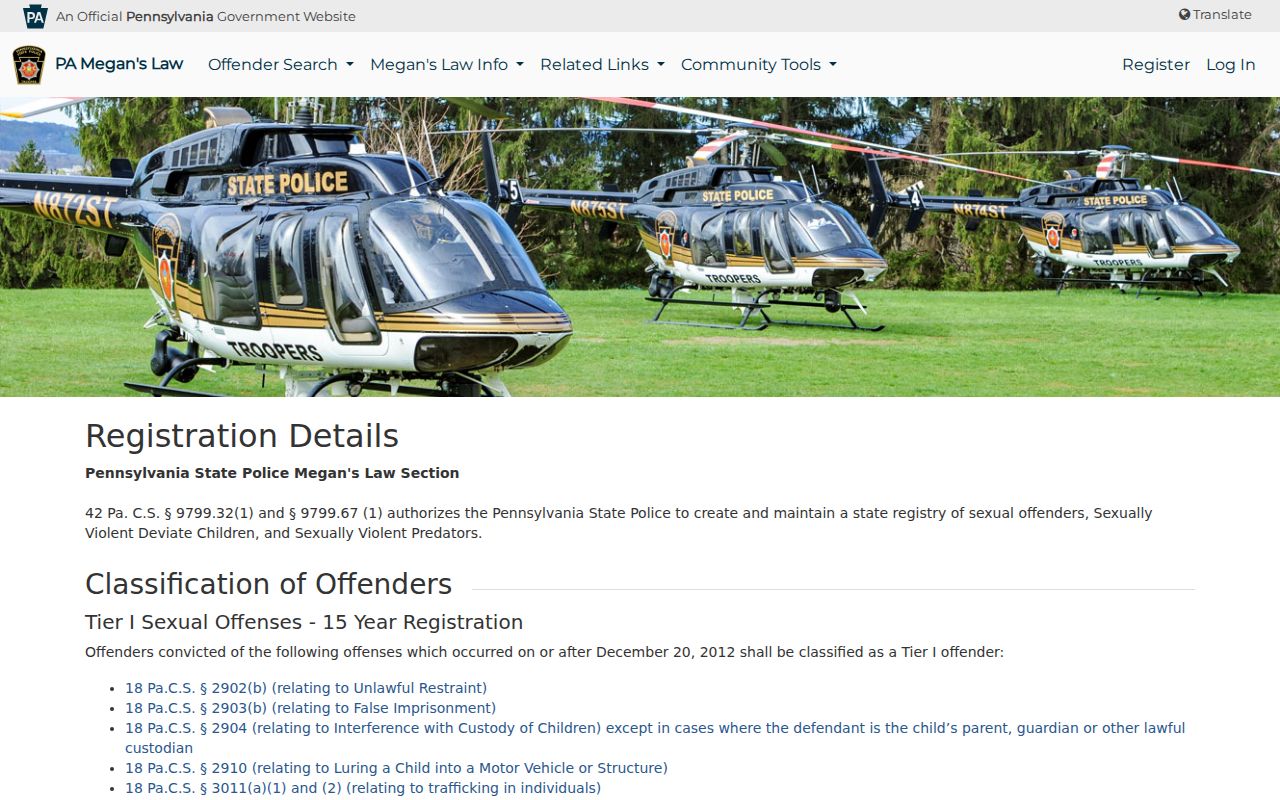
Use the registry for its statutory purpose. Use jail, police, UJS, DCR, and PSP repository channels to trace an Allegheny County arrest and its outcome.
Arrests vs Convictions
An Allegheny County arrest shows that police took a person into custody or initiated an arrest process. It does not establish guilt. A conviction is a court judgment after a guilty plea, no-contest plea treated as a conviction, or verdict. Charges at booking can change when prosecutors file the information, and each count can end differently.
| Point | Arrest Record | Conviction Record |
|---|---|---|
| Creator | Arresting police and jail | The court |
| Meaning | Custody or arrest was recorded | A finding of guilt was entered |
| Main source | Police report and jail booking | UJS and DCR case file |
| Possible later result | Release, no filed charge, dismissal, or acquittal | Sentence, appeal, or qualifying record relief |
Note: An arrest is not proof of guilt, and a booking may never lead to a conviction.