
How to Check Allegheny County Criminal History
Begin with the free Unified Judicial System of Pennsylvania Web Portal Case Search when the goal is to trace a prosecution. Select Case Information and Case Search, choose the proper court level, set the county to Allegheny, and use a docket number if one is known. A participant name, date of birth when available, filed-date range, case status, and criminal case category can reduce false matches. The portal needs no account. A name alone is not enough to prove identity, especially when several people share it.
The Allegheny County Department of Court Records explains where the full county file can be inspected. Jail staff answer custody questions, the arresting agency controls its own report, and Pennsylvania State Police supply repository checks. Use the channel that answers the actual question.
- Identify whether the needed fact concerns a court case, arrest report, custody status, or repository history.
- Gather the full name, spelling variants, date of birth when public, docket or incident number, and a useful date range.
- Search both the appropriate minor court and Common Pleas when a case may have moved forward.
- Read the disposition for each charge instead of treating a filing or arrest as a finding of guilt.
- Ask the originating office for an official file or certified copy when the web entry is not enough.
The official UJS interface shows how county and court filters fit together. View the state court search source before using it.
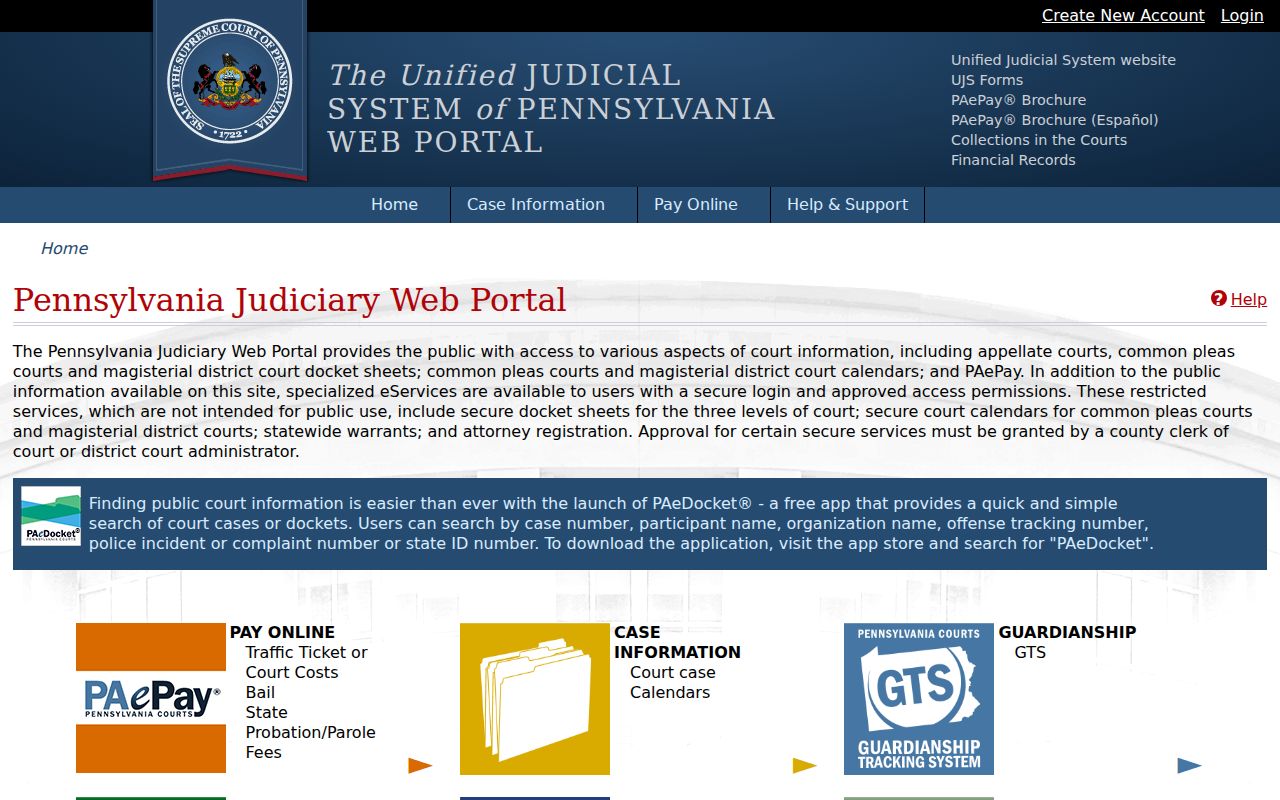
That search is the best first view of docket events, but it does not replace every pleading in the Department of Court Records file.
Allegheny Criminal Records Across Three Offices
One event can create several Allegheny County criminal records. Police document the incident and arrest. The jail records intake, bail, housing, release, or transfer. A minor court records the complaint, preliminary arraignment, bail, and hearing. If charges are held for court, the Common Pleas file then records the information, motions, plea or trial, disposition, and sentence. Fingerprintable arrests also receive an Offense Tracking Number, or OTN, which helps connect the arrest cycle to court reporting and the Pennsylvania State Police Central Repository.
| Question | Best official channel | Main limit |
|---|---|---|
| What happened in court? | UJS Case Search and county DCR | The web docket may omit filed documents |
| Is the person in local custody? | Allegheny County Jail | County custody is not in the state DOC locator |
| What did police report? | The arresting or responding agency | Investigative and private facts may be redacted |
| What does PSP report by identity? | PATCH or personal Access and Review | PATCH is Pennsylvania-only, not a national file |
This split prevents a common error. A booking entry can disappear after release while the court case remains active, and a dismissed charge may remain part of an arrest trail until legal relief applies.
Official Pennsylvania Background Checks
The Pennsylvania State Police Central Repository operates Pennsylvania Access To Criminal History, known as PATCH. Any requester may submit a name-based Pennsylvania check. A standard request costs $22, a notarized response costs $27, and a volunteer check is free. The subject-only Individual Access and Review process costs $20 and is the better route for a person auditing or correcting their own repository record. PATCH checks Pennsylvania law-enforcement criminal-history files. It does not supply a nationwide record or every document stored in an Allegheny County court file.
A single unregistered online session permits up to ten checks. “No Record” may return at once. “Under Review” means staff must compare the request manually and may take two to four weeks. It does not mean a record was found. Mail requests use the SP4-164 form and certified check or money order. Program-specific fingerprint checks go through IDEMIA/IdentoGO after mandatory pre-registration.
The official PATCH screen is shown in the Pennsylvania State Police portal source.
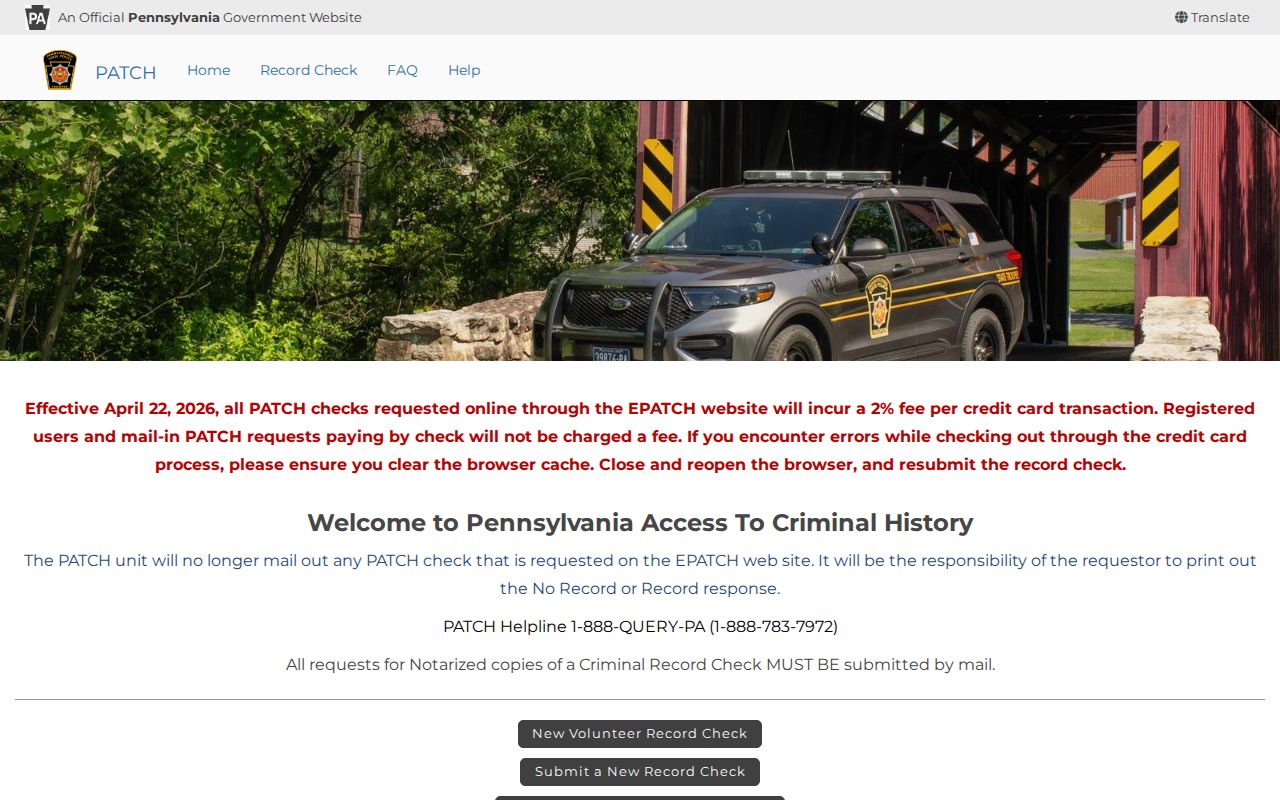
Its response concerns the state repository, so compare it with the underlying Allegheny County docket when a disposition needs context.
Allegheny Criminal Files in Room 220
Electronic access still leads back to the Allegheny County Courthouse at 436 Grant Street in Pittsburgh. Room 220 holds criminal files for the current year and four prior years, provides public terminals, and handles criminal records, fines, costs, and restitution. Older records remain available, but staff order them from off-site storage and charge the current retrieval rate. The records line, 412-350-5320, answers procedure and file-order questions. Staff do not discuss case facts by telephone.
The counters are divided by task. Room 114 handles dockets, appeals, bonds, summary appeals, and expungements. Room 222 handles DUI matters. The full official file can contain material not displayed as a downloadable document on UJS, so a docket result should not be labeled a certified court record.
The county outlines these counter and terminal options in its criminal records office source.
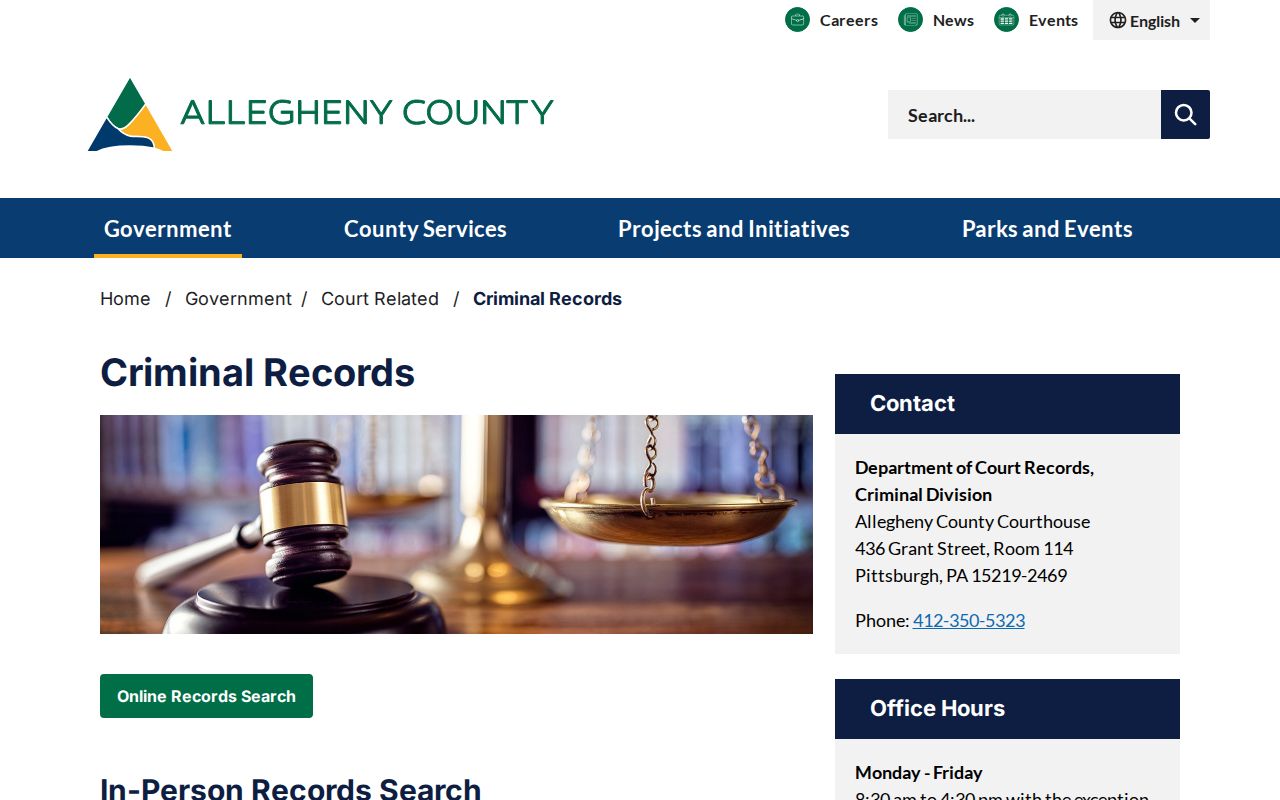
The room-by-room system matters because sending a request to the wrong counter can delay a copy, certification, appeal, or expungement filing.
Types of Criminal Records
“Criminal record” can mean records created at different stages. An incident report tells what police recorded and may protect victims, witnesses, juveniles, medical facts, or active investigative details. An arrest record proves a custody event, not guilt. A booking entry focuses on intake and release. Court files show what prosecutors filed and how judges resolved each count. Repository criminal history compiles identity-linked arrest and disposition cycles reported to PSP.
- Minor-court records: complaints, preliminary arraignments, bail, hearings, warrants, and summary matters.
- Common Pleas records: informations, motions, orders, pleas, trials, sentences, appeals, and financial obligations.
- Custody records: Allegheny County Jail data for local detention, Pennsylvania DOC data for state custody, and BOP data for federal custody.
- Supervision records: public dockets may show probation or parole terms, but internal supervision notes are restricted.
- Registry records: public Pennsylvania Megan’s Law fields are controlled by statute and remain separate from court and custody databases.
Allegheny Criminal Cases Change Courts
Allegheny County is Pennsylvania’s Fifth Judicial District. Its local path includes 46 magisterial districts plus Pittsburgh Municipal Court. Minor judges handle summary cases, issue warrants, conduct preliminary arraignments and hearings in misdemeanor and felony matters, and set bail. Charges held for court advance to the Court of Common Pleas Criminal Division. That handoff explains why a search limited to one court level can miss the part of the history a reader needs.
The Fifth Judicial District overview depicts the local court structure.
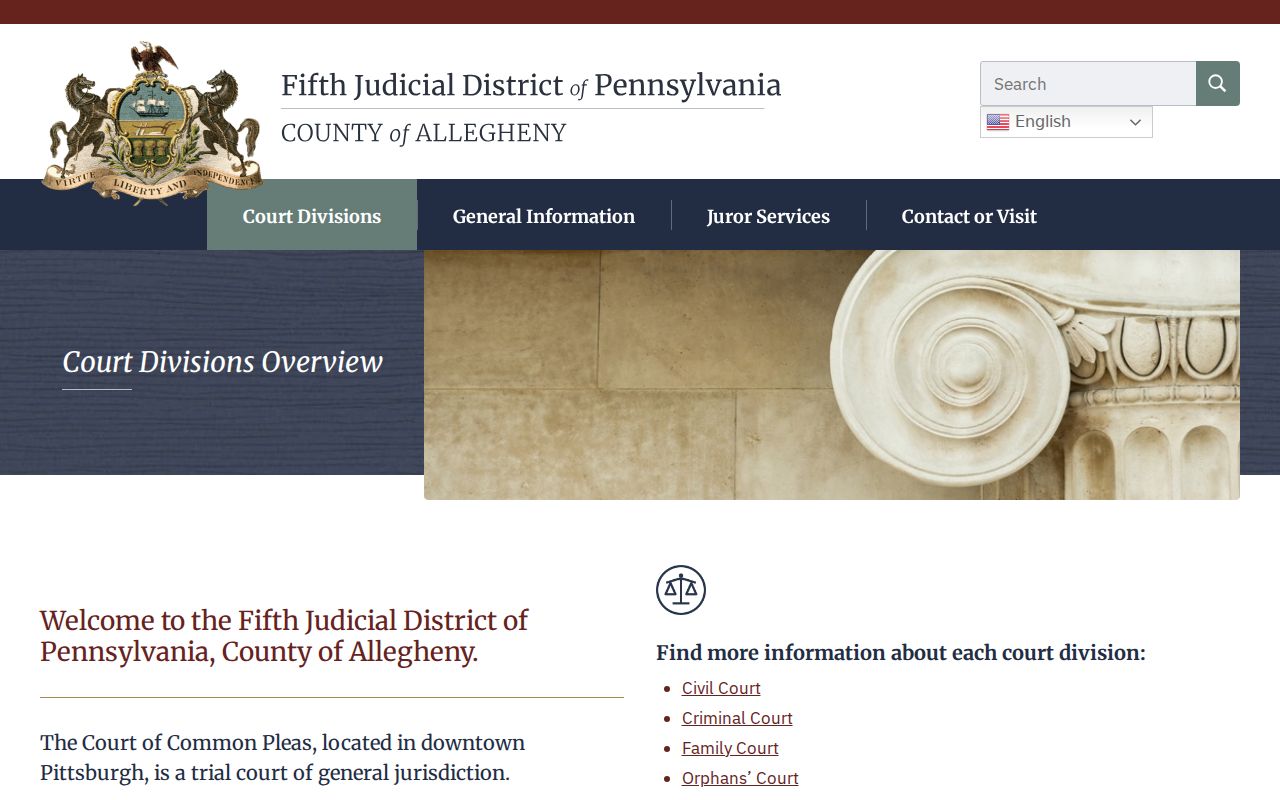
Searchers should check the preliminary docket and the later CP-02-CR Common Pleas docket, then read each charge’s outcome rather than relying on a case caption.
What an Allegheny County Criminal Record Shows
The contents depend on the source. A UJS docket can display status, charge statutes and grades, counsel, bail, hearing dates, filing events, disposition, sentence, fines, costs, restitution, and balances. Repository history groups identifiers and aliases with arrest cycles, agencies, charges, dispositions, and supervision. Jail data instead emphasizes booking and custody. Pennsylvania court policy excludes Social Security numbers, operator-license numbers, and victim contact information from public electronic access.
| Name & Identifiers | Legal name, aliases where shown, date-of-birth treatment, docket number, and OTN. |
|---|---|
| Arrest / Booking Data | Arresting agency, booking date, alleged charges, bail, custody, release, or transfer. |
| Charges & Statutes | Count, description, Pennsylvania statute, grade, and the filed form of the charge. |
| Disposition | Outcome for each count, such as conviction, acquittal, dismissal, withdrawal, or nolle prosequi. |
| Sentence | Incarceration, probation, restitution, fines, costs, and concurrent or consecutive terms. |
| Custody / Supervision | Public status may appear, while internal probation and treatment notes remain restricted. |
“Nolle prosequi” means the prosecution discontinued a charge with court permission. “ARD” is a pretrial diversion program. Neither term should be read without the count-level disposition and later docket events.
Allegheny Criminal Dockets Include Specialty Courts
Allegheny County names six problem-solving courts: Domestic Violence, DUI, Drug, Mental Health, Sex Offender, and Veterans Courts. These dockets combine court review, supervision, services, incentives, and sanctions through plans tailored to eligible participants. A public docket may therefore show program reviews or special conditions that look different from an ordinary case calendar.
Participation does not erase the prosecution by itself. The final disposition and Pennsylvania relief law control whether the record remains public, becomes subject to limited access, or qualifies for expungement. The official problem-solving courts source describes the six programs.
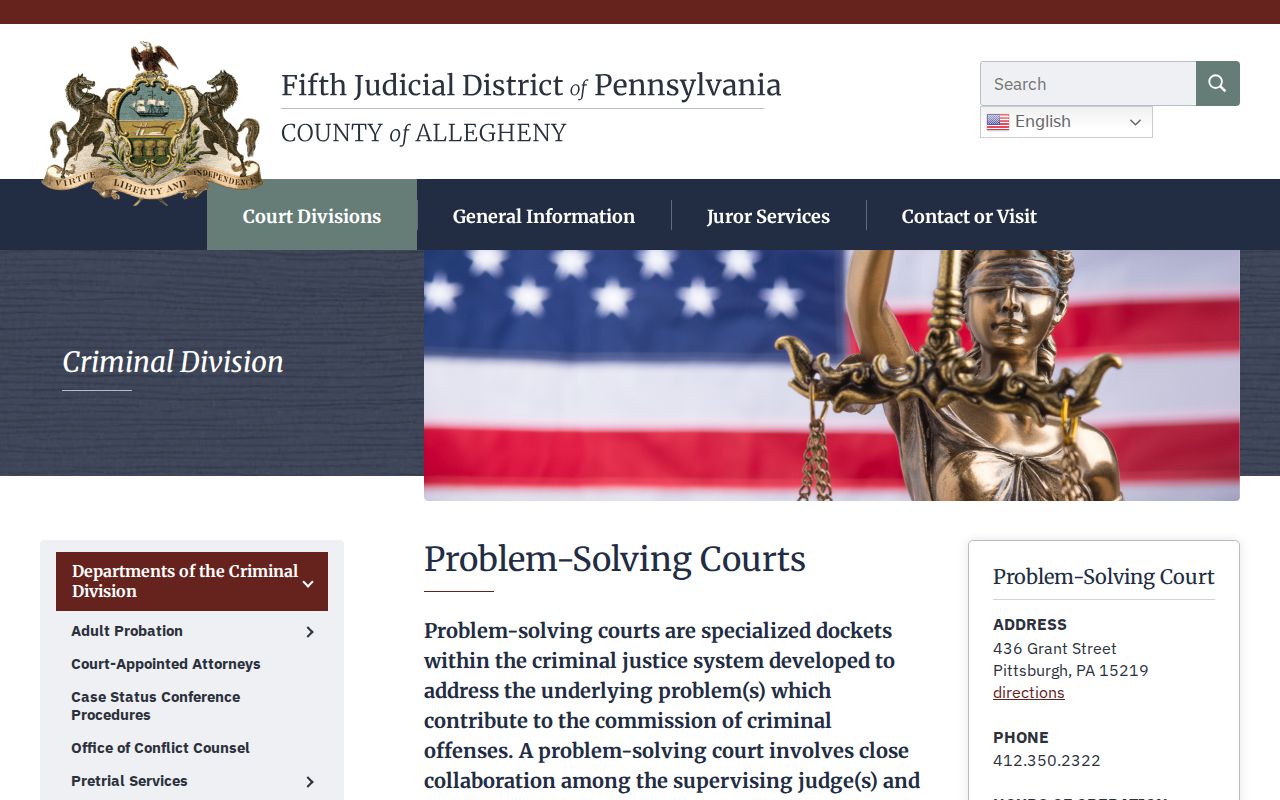
The named programs are local context for reading docket events, not a substitute for the judge’s orders or the certified case file.
Public Access Laws
Access follows the record’s source. The Pennsylvania Right-to-Know Law supplies a general agency-request process, but judicial records follow court access rules. A request should identify the agency, date range, incident or case number, record description, and desired format. Active investigations, victim facts, juvenile records, protected identifiers, and sealed material may be withheld or redacted. A denial should state its legal basis and appeal route.
Key access rules:
Pennsylvania Right-to-Know Law, 65 P.S. §§ 67.101 et seq. creates the general request process subject to exemptions and separate court rules.
18 Pa.C.S. § 9121 governs PSP dissemination and limits release of specified information.
UJS Electronic Case Record Public Access Policy §§ 2–3 permits public electronic access while excluding protected data.
18 Pa.C.S. §§ 9122–9122.5 govern expungement, limited access, Clean Slate treatment, and retained justice access.
18 Pa.C.S. § 9123 sets juvenile expungement routes and conditions.
Finding Allegheny County Jail Custody
The Allegheny County Jail general line at 412-350-2000 handles current custody, location, pod, release, and transfer questions. Former incarcerated people may call the Jail Record Office at 412-350-2635. Arraignment Court at 412-350-3240 can address booking-date, arraignment, and bail information. These phone channels matter where a public web roster does not answer the question.
The county gathers jail access points at its official jail hub.
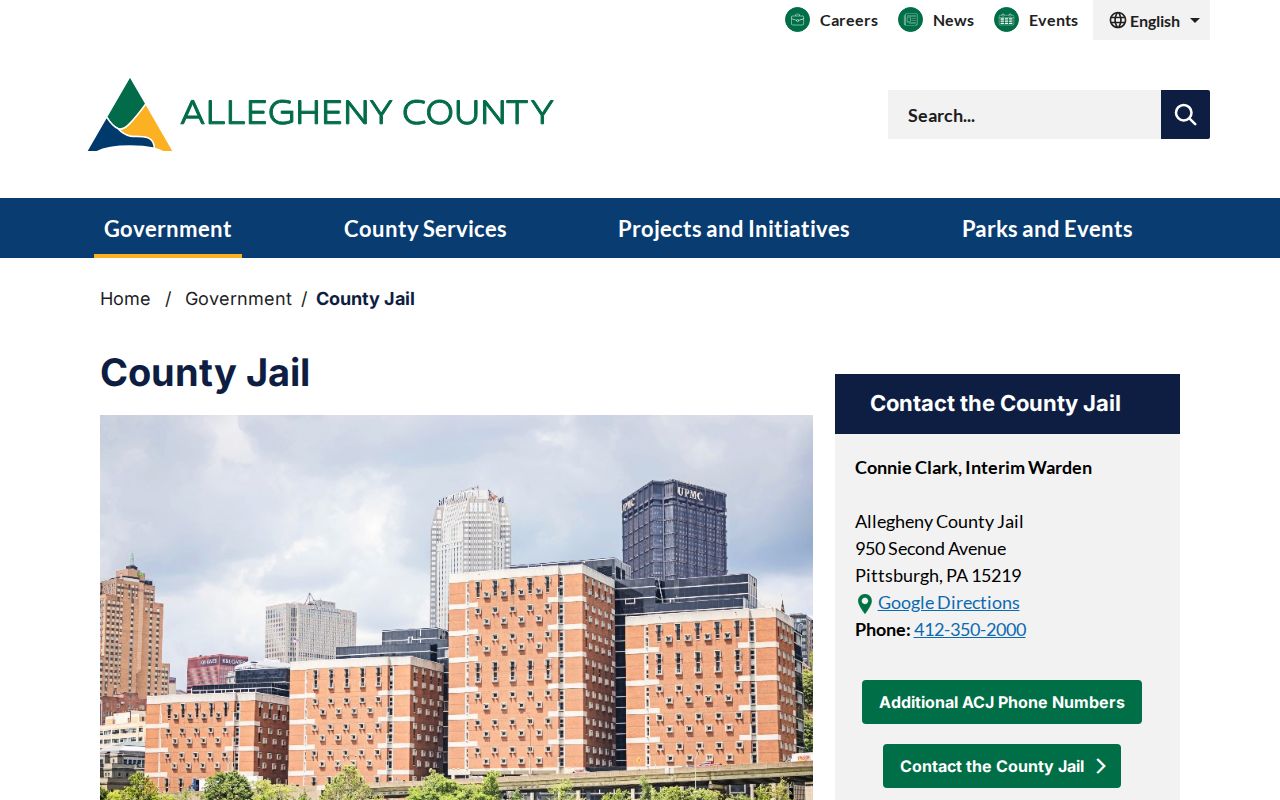
If a person is no longer there, release or transfer may explain the change. Search the Pennsylvania DOC locator for state custody and BOP for federal custody, then use UJS to follow the case itself.
The jail’s useful phone directory separates arraignment, bail, warrant, visitation, and records contacts.
That division helps route an inquiry without treating one office as the source for every Allegheny County criminal record.
Sealed, Expunged & Restricted
Expungement and limited access are not the same. Expungement directs qualifying information to be removed, subject to narrow statutory exceptions. Limited access blocks ordinary public or noncriminal-justice dissemination while preserving access for courts, law enforcement, and other recipients authorized by law. Pennsylvania’s Clean Slate provisions grant automatic limited access to qualifying records, while petition-based relief has its own waiting period, payment, offense, and exclusion rules.
Allegheny County expungement filings go through DCR Room 114 at 436 Grant Street. The filing fee is $232, and the expungement line is 412-350-3271. After an order, DCR sends notice to PSP, which alerts justice agencies that received the criminal-history information. A person should later check public UJS display and use PSP Individual Access and Review to examine repository treatment. The Public Defender offers an Expungement Quiz and Project Reset.
The county publishes its current charges in the criminal records fee schedule.
The schedule also distinguishes a $25 county criminal-record check from the $22 PATCH repository check and a $20 DCR certification.
Allegheny Criminal Warrants Need Court Confirmation
Minor judges, Pittsburgh Municipal Court, and Common Pleas may issue warrants. A bench warrant often follows a missed appearance or violation matter. Search warrants may remain sealed. Warrant status can change quickly, so an old list or third-party result is not safe proof that a warrant is active or cleared.
The Jail directory lists the Warrant Office at 412-350-4714 but states that warrant information is not given by phone. Review UJS docket events, contact the issuing court or counsel, and follow official instructions for confirmation and resolution. After execution, Arraignment Court can address bail and release. The Pennsylvania parole absconder list covers a separate supervision issue and is not a complete county warrant database. Do not confront anyone or rely on an unofficial people-search service.
Allegheny Criminal Custody Versus State Supervision
County and state custody tools serve different groups. The Pennsylvania Inmate/Parolee Locator covers state incarceration and state parole, updates daily, and expressly excludes county custody. Search by last name or inmate number; first name can help with common names, while other displayed traits may be self-reported or unverified. Allegheny County Adult Probation and Parole, part of the Common Pleas system, handles county supervision from the Manor Building and can be reached at 412-350-2320.
The official Pennsylvania Inmate/Parolee Locator source states the search scope.
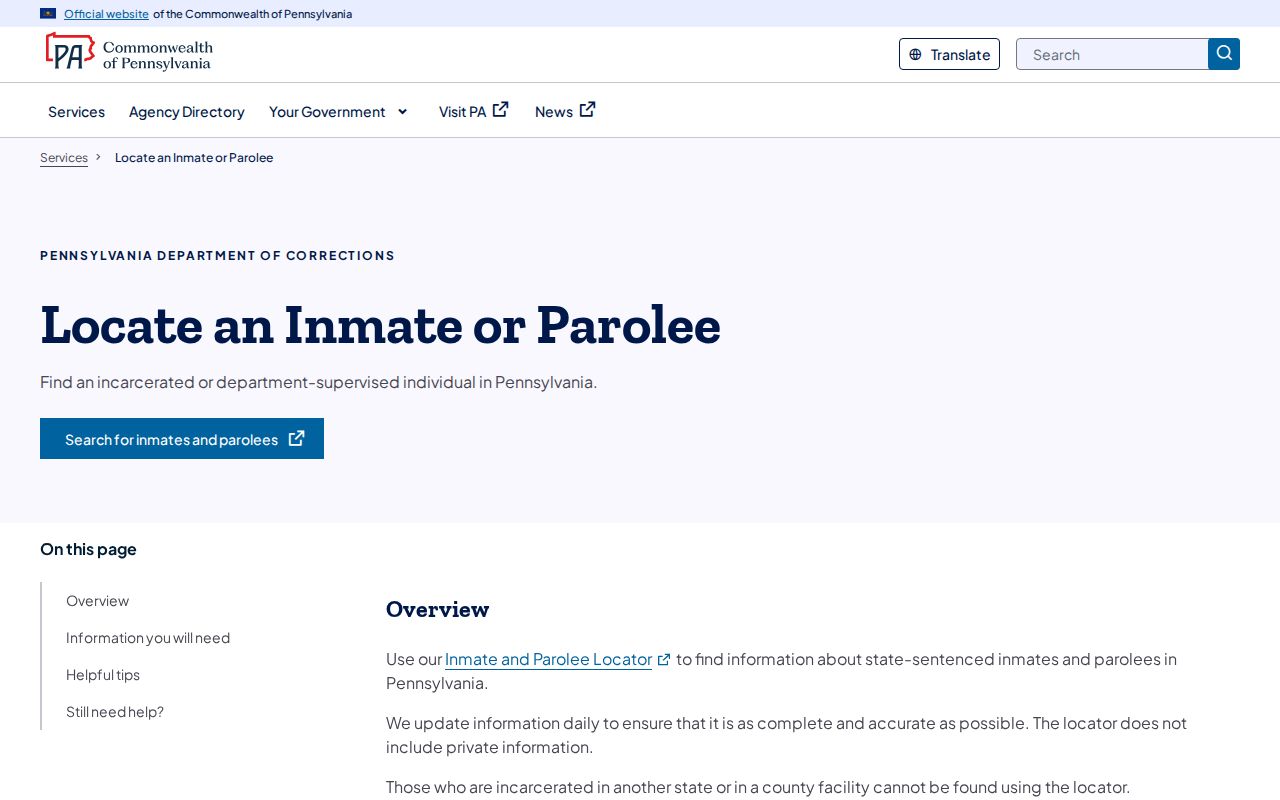
A sentencing docket, the correct custody locator, and the supervising office together give a clearer view than any one result alone.
Criminal Records by City in Allegheny County
Local police departments create their own incident and arrest reports, even though criminal prosecutions later move through county and state systems. Pittsburgh has Pittsburgh Municipal Court and its own city records channel. McKeesport and Clairton each maintain separate police departments, while county jail staff hold local custody records and DCR holds filed Common Pleas cases. The city pages follow those distinct routes using the 2020 Census ranking of incorporated cities.
Pittsburgh Criminal History
302,971 residents in 2020 · Pittsburgh Police, Municipal Court, county jail, and Common Pleas form the local record path.
McKeesport Criminal History
17,727 residents in 2020 · McKeesport Police keeps the original city report before records move into county courts.
Clairton Criminal History
6,181 residents in 2020 · Clairton’s police channel and Magisterial District 05-3-09 begin the local route.